A Global Reality Gut Check
About The Northern Touch
We are living through the quiet collapse of the digital town square that started decades ago when it was decided commerce was more important than humanity. The Internet has become so thoroughly unusable that the smartest people you know now get their information from newsletters on Substack.
Think about that for a second. We built the greatest information distribution system in human history, and it devolved so quickly that we’re essentially back to subscribing to pamphlets. Search has become an SEO wasteland and its cousin Social is now an algorithmic slot machine designed to maximize hatred, not insight. The average person scrolls through more content in a day than their grandparents consumed in a year, and retains less.
It is time to admit that we effed it up and that the post-internet era is upon us.
The term originated in the art world, but the idea is simple: the same way “post-industrial” didn’t mean we stopped making things, this evolutionary moment means we no longer organize society around factories. In this case, those factories are the current tech behemoths that control literally everything in an Orwellian manner.
Embracing the idea of the post-internet era means we stop organizing culture around platforms that are optimized for hate rather than meaning. We stop allowing the best parts of us to erode away so a billionaire can buy another yacht. We finally allow that it’s time to reclaim our personal agency and let that dictate how we move forward. It means we finally get to have a say.
But who the eff are we?
The HoserDNA Imperative
I didn’t set out to be a de facto subject matter expert on Canadian culture. But when you spend decades at the intersection of the Arts, Tech, Advertising, and Global Markets, you stop seeing press releases and start seeing data.
That’s not the part that matters.
What matters is the pattern recognition that has emerged. And after three decades of watching how culture actually moves, not how we pretend it moves in politics or academic papers or industry reports, I’ve noticed a structural reality that everyone seems too polite to say out loud.
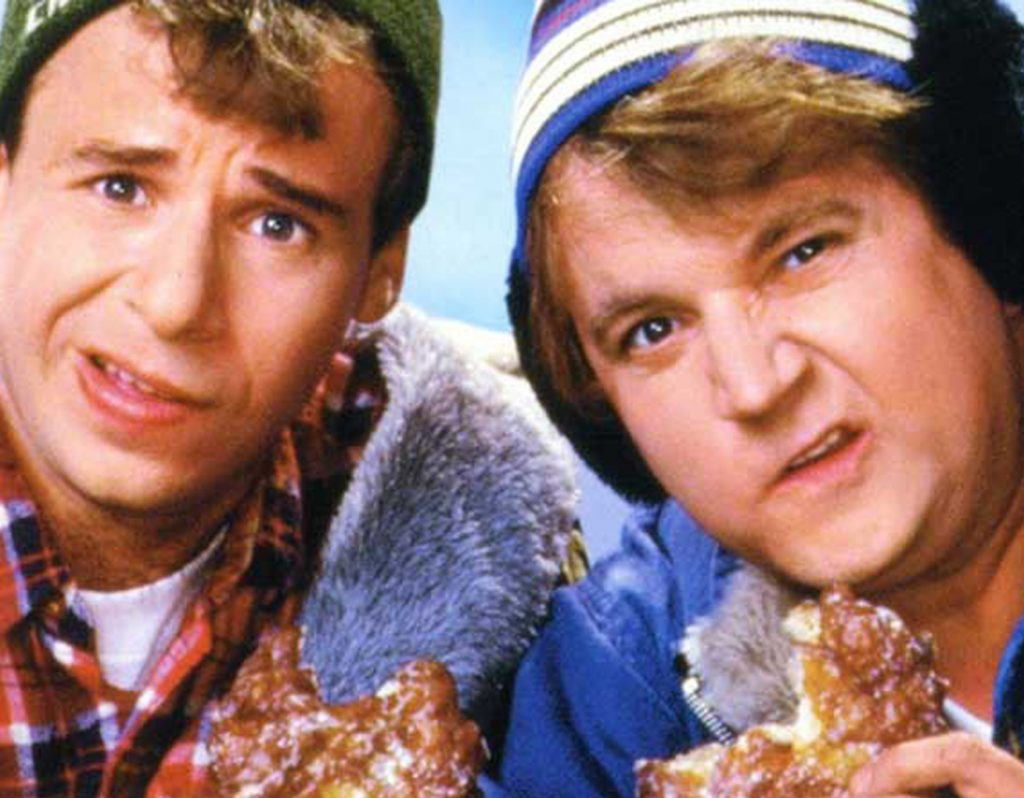
In the words of Shoresy: Time to set the tone and let them know who we are.
Hosers conquered Hollywood so quietly that the Americans still think they own it.
This isn’t some “rah-rah Canada” sentiment. It’s a technical audit.
Hollywood is a brand, but for the last thirty years, the industrial engine has been Canadian. When you shoot in Toronto, Winnipeg, Vancouver, or Montreal, you aren’t just “saving money” with a tax credit, you’re plugging into an entire ecosystem of Canadian technical crews, lighting setups, post-production houses, and camera rhythms that have defined the look and feel of “global” cinema for decades. And I haven’t begin to include the promotional tentpole powerhouse and must stop on the way to Oscar that is the Toronto International Film Festival.
We’ve been the quiet foundry for the American dream. The lighting that made their stars look iconic? Designed by a guy from Mississauga. The visual effects that sold their blockbusters? Rendered in a studio in Gastown. The editing pacing that keeps an audience hooked? That’s the highly coveted Scarborough mojo at work.
Hollywood is a hollow shell, desperately recycling reruns, BBC scripts and Asian cinema to keep the lights on. The domestic box office is in what analysts are calling a “negative feedback loop.” 2025 barely hit $8.9 billion, down from the $10-11 billion that was routine before the pandemic. The highest-grossing film of 2025 globally? A Chinese animated sequel called Ne Zha 2, with over $2 billion in revenue. Most Americans have never heard of it.
They outsourced their soul to us years ago and kept the ZIP code on the box. As far as I’m concerned, we didn’t just make their movies, we are the DNA of their modern culture and it’s time we finally take agency of that fact instead of watching their decline and hoping the glory days of the never ending streams of cash will come back. They’re not coming back. We’ve made all the money we can with them. It’s time to move on until they can get their act together.
It’s time for us Hosers to stop looking south and start looking literally everywhere else.
The Golden Triangle Makes Itself Known
I remember being in China with my fellow ad strategist Paul when I lived that life, looking at campaign KPI numbers that make US metrics look like a rounding error. When you see how the scale of the East functions, you realize the US doesn’t have a monopoly on eyeballs anymore. We’re talking about hundreds of millions versus hundreds of billions. With a B. The reality is that the “center of the universe” has shifted. You start to see how small the U.S. actually looks when you zoom out.
This is why the newly emerged Golden Cultural Triangle of Bangkok, Manila, & Seoul matters.
These aren’t secondary markets anymore. They’re where the future of global culture is being built. And they all feed into Shanghai, the massive gravitational force that has become the cultural clearing house for a billion-plus consumers who are mobile-first, video-native, and completely comfortable buying things from a livestream.
Numbers don’t lie. Let’s check the scoreboard:
- China has over 1.1 billion internet users with a penetration rate of 79.7%
- Chinese brands spent $19.2 billion on influencer campaigns in 2024—2.8x what US and UK brands spent combined
- Live-streaming commerce in China hit $807 billion
- Social commerce accounts for 16.3% of total e-commerce in China, compared to 5% in the US
- WeChat alone has 1.3 billion monthly active users
- Southeast Asia accounts for nearly a quarter of TikTok’s global advertising audience
- Indonesia’s social commerce market is projected to hit $22 billion by 2028
- The Philippines’ internet users watch 20 hours of video content per week— more than half of it short-form
- Bangkok anchors the Golden Triangle as a powerhouse of cultural capital, with its creative economy now valued at approximately $42.4 billion—8% of Thailand’s GDP
- Seoul drives a content export market that reached a record-breaking $15 billion in 2025, while the broader metropolitan area manages roughly $850 billion in investment capital
This is where momentum lives now. In places where people are building instead of arguing about who deserves what slice of the old pie. Meanwhile, America’s biggest streaming companies are fighting over a mature market with declining engagement. If you’re still thinking AmericaFirst for distribution strategy, you’re playing checkers while the world moved to Go.
The Betamax Problem
Which leads me to home turf. Let’s talk about the tension here, because it’s instructive.
Canada just made a historic deal with China allowing 49,000 EVs coming in at reduced tariffs in exchange for relief on canola and other agricultural products. The federal government is signaling that Canada is ready to diversify, to stop being wholly dependent on one trading relationship, to actually take its place in the global economy.
Meanwhile, Ontario’s Premier is fighting to keep the traditional auto sector alive with the US while letting the centre of the moviemaking universe in North America decay. Toronto was pumping out content that the world consumed, but the provincial focus has been elsewhere on deals that serve a different era and more importantly, their own pocketbooks.
A little on the nose? Sure. But it’s helpful to actually have the right conversation.
On the federal level, we’re finally embracing the mojo that comes with creating new ways of doing things wide open and undefined. And provincially, there’s a guy trying to save Betamax because that’s the only way he knows how to get a taste.
I’m not making a political statement. I’m making an observation about systems. When you optimize for what worked in 1985, you get left behind by people optimizing for 2026.
Why Culture, Technology, and Getting Back to Living
So why does any of this matter? Because the same pattern that played out in content is about to play out in technology, unless someone does something about it. As established, Hollywood outsourced its production soul to Canada and kept the logo, so we can’t look to it for guidance for literally anything.
Now the tech giants have spent twenty years building digital infrastructure that makes people anxious, distracted, and disconnected from their own values and are attempting to do the same through the Arts as we enter the next evolution of technological advancement.
They replaced voice with text, then replaced text with algorithmic feeds designed to keep you scrolling. The average person types more than they speak. The average kid would rather send a message than make a call. They have shut down the voice in us that makes us human and they are looking to codify that result.
And at no point throughout all this is the opportunity to just be within the confines of the beauty of creation that is what defines being human. The time needed to let things simmer has been paved over with a parking lot of ads and hate.
That’s not technology’s fault. That’s a choice we made in how we designed these systems. And choices can be made differently. Not metaphorically. Actually.
The opportunity now for culture is to build products that gives humanity its voice back.
It comes down to this: tools shape the behavior, the behavior shapes the culture, and the culture shapes what kind of life is even possible.
Canada has always been too polite to claim its place on the Global Pop Cultural mantle. We’ve been making the Films and the TV shows and all that is in between. We’ve been developing the technology. We’ve been training the crews and building the infrastructure and doing the quiet work that makes everything else possible.
And here the thing you have been waiting to read. Please take it as a rallying cry as it is the reason why us Hosers are look so fondly upon by the world : our empathy is our WeaponX. It is the reason why Hollywood thinks it is still has relevance. We just can’t find the heart to tell them they lost.
Maybe it’s time to stop being polite and start being accurate. Advancements in technology have stripped away the complexities and more importantly the cost of shipping products to solve a business problem.
This means that the next revolution will come from custom-tailored micro experiences that power a person’s most specific need. What this means for you, my fellow Arts Soldier is that there is no longer any excuse to expand your revenue sources to help with your mission. You are going to have really push yourself to dream which is a skill that many might not have had the opportunity to use in recent decades. But it is this very exercise that might be the very thing the world is looking for.
The question is whether we are going to take back seat to our recently altered neighbour to the south, (now running on divisiveness as a core feature instead of the bug we always knew it to be), driving these experiences or are we finally going to step into the role we have been playing all along. The place in the global landscape where once again our cultural products are defining the human experience in a manner that only we can provide. We must dust off the cobwebs and remember our stuff has always been better. And it was that knowledge we will help shape the world. Respectfully and always with a sorry when needed.
The personal thread that I am pulling is around the idea of what UI could be if powered by our voice. I challenge you to pick a lane. Dive all the way in and see what can be done to make the next epoch just a little more Star Trek and a little less Star Wars.
As the distribution channels of the post-internet era become known and the market does with them what it does, it will be us Hosers at the leading edge. Like we always have been. Like we always are and always be.
That’s what I mean when I talk about potential of our Culture. It’s not nostalgia. It’s resourcefulness. The ability to do more with less. To have the humility to listen but the audacity to build anyway. We’ve been doing that under the radar for decades. The post-internet era isn’t coming. It’s here.
And some of us already know the way out.
—